
Fantasy Creatures & World Creation Art Camp – Summer Art Camp
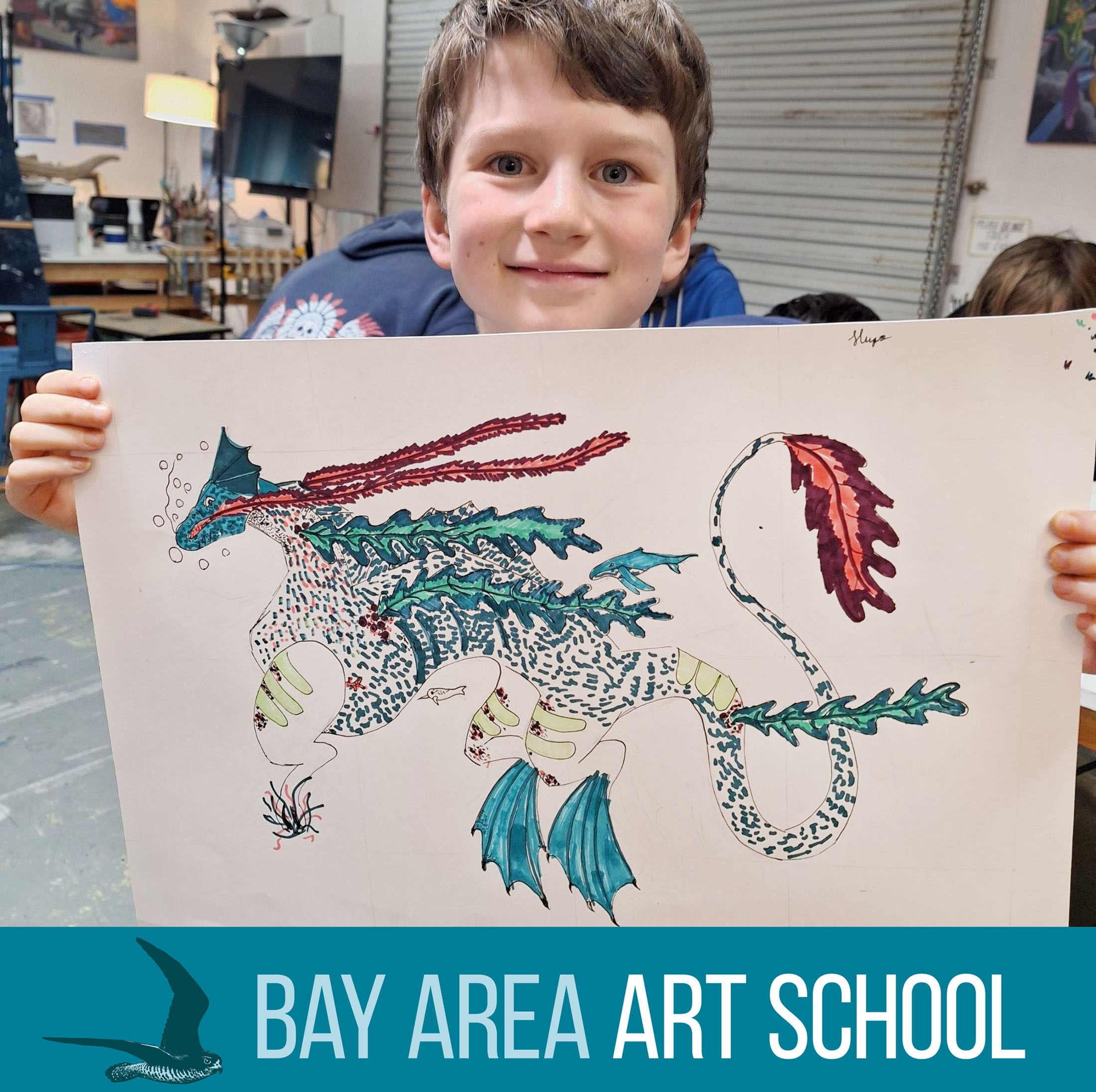
This camp combines structured creativity and imaginative artwork. Campers design original creatures and the worlds they inhabit using a guided process that blends observational reference, anatomical logic, environmental design, and visual storytelling. Rather than free drawing alone, we teach how to build believable ecosystems.
Campers move from ideation and sketching to refined final pieces, learning how concept artists think through function, form, and narrative. The emphasis is on creating believable creatures — why the creature moves this way, how the habitat supports it, what visual cues communicate personality or hierarchy. The result is stronger problem-solving, design thinking, and visual communication skills.
Core Structure (Typical Week)
1. Idea Generation & Concept Development
- Brainstorming creature types (hybrid animals, elemental beings, myth-inspired characters)
- “What if?” prompts (What if gravity worked sideways? What if plants were predators?)
- Quick thumbnail sketch rounds (10–20 small ideas before committing)
- Mood boards: habitat, climate, culture, symbols
2. Creature Design
- Combine real animals (e.g., owl + lizard + stag)
- Define anatomy logic (How does it move? Fly? Hunt?)
- Design variations (baby / adult / battle form)
- Expression sheets (happy, angry, wounded, alert)
3. World Building
- Map design (terrain, borders, landmarks)
- Ecosystem rules (predators, food chain, weather)
- Architecture (homes, fortresses, tree cities)
- Cultural elements (flags, tools, clothing, language symbols)
4. Environment & Scene Creation
- Habitat backgrounds (swamp, floating island, underground cave system)
- Lighting mood (night glow, lava light, fog)
- Scale drawing (tiny creature in massive landscape vs. giant creature in village)
5. Story Integration
- Short written backstory (1–2 paragraphs)
- Conflict or quest concept
- Character relationships (ally, rival, leader)
6. Final Presentation Piece
- Full illustration of creature in environment
- Labeled character sheet (abilities, weaknesses, habitat)
Materials & Media (Commonly Used)
- Graphite and colored pencil
- Alcohol markers
- Watercolor for atmospheric backgrounds
- Ink linework
- Mixed media layering (without sculpture per your criteria)
Age Differentiation
8–10
- Emphasis on freedom and hybrid animals
- Large, colorful drawings
- Simple world rules
11–14
- More structured anatomy logic
- Perspective in environments
- Map design and consistent ecosystem rules
- Character sheets modeled after game/film design formats
Teaching Style Patterns Observed in These Camps
- Prompt-based instruction rather than technical drills
- Group brainstorm sessions
- Peer sharing and idea comparison
- High energy, theme-immersive language
- Less emphasis on realism accuracy
- More emphasis on originality and storytelling
Why These Camps Tend to Attract Kids
- Immediate creative payoff
- Ownership of ideas
- Feels like game/film concept art
- Flexible skill levels (less intimidating than figure drawing)
- Easier marketing language (“Dragons & Mythical Worlds” is emotionally sticky)
- This camp is intended for 9-12 years old.
What do I bring?
- Bring any of your own materials you’d like, but we have all supplies here, so this is not a requirement.
- Clothing that you can get messy. Acrylics paint is permanent.
- Bring a warm layer in case it gets cold.
- Campers need to bring lunch, snacks and a water bottle. No nuts allowed on premises.
Camp requirements
- Please relate any allergies directly to us prior to the first day of camp.
- A signed waiver will be required by parent or guardian by or on the first day of camp.
- There is no early drop off for this camp.
- There is no late pick up for this camp.
Camp day structure:
Art Camp for middle school and highschool kids, at Bay Area Art School, begins at 10:00 AM, with guided instruction or a prompt. We take short breaks every 50 to 60 minutes to allow kids to stretch and reset. Lunch takes place from 12:00 to 12:30 PM, followed by a supervised walking field trip around Sharp Park and sometimes along the waterfront. Depending on the group size, we may explore the beach, though we do not allow anyone to get wet or touch the water. Art activities resume around 1:00 PM, with another break to move around around 2:00 PM. In the afternoon, we wind down with a film at 2:30-3:00 PM, depending on the day’s activities, before pick-up at 4:00 PM.
Having trouble completing purchase?
If you can’t find the credit card payment information on the online form below, please try reselecting the quantity of campers and the payment link will appear.
